How might we create emotional and intellectual engagement through a participatory and interdisciplinary problem-solving mindset within employees of large organizations, that ensures the brand-culture experience is seamless between employee and customer?
Note: Due to confidentiality, parts of the research and concept are either shown blurred out or in a limited way. For more information about the project, please get in touch
Master Thesis: MA Leadership in the Creative Industries
Hochschule Darmstadt
5 Months (Individual)
In collaboration with Merck KGaA, Darmstadt
Abstract
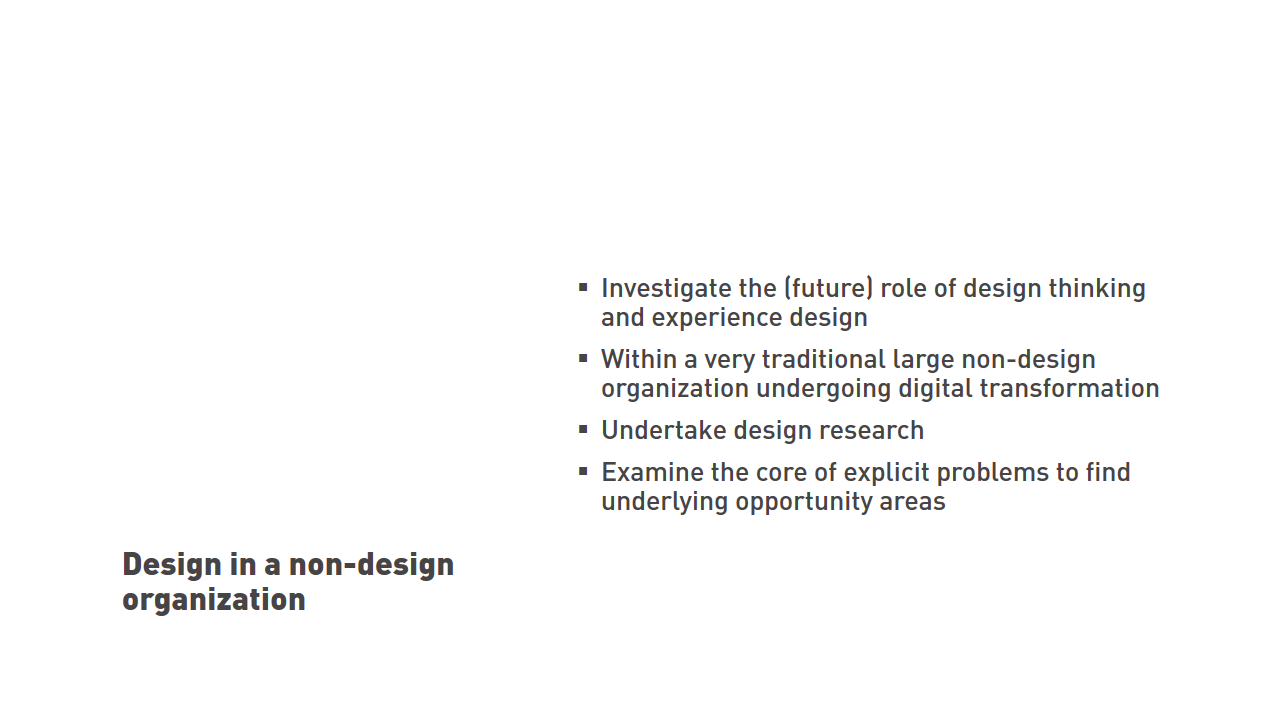
This research project investigates the future role of design thinking and experience design in concomitance with the pressing digital transformation of large organizations.
The research reveals a strong link between the tools, the spaces and the cultural environment experienced by employees, the overall customer experience presented by the organization and the employee participation in problem-solving and innovation initiatives. Furthermore, organizational responsiveness and communication are key factors in motivation and instigating behavioral change.
The work develops and evaluates a model comprising of three elements to facilitate, inspire and trigger change at Merck KGaA. Based on the principles of design thinking, it eases employees into turning thoughts in to actions simultaneously creating a support system that actively communicates and reaches out to the audience. It urges connection and collaboration that is based on forming a network that aims to bring similarities and shared aims to the surface.
1.
Research
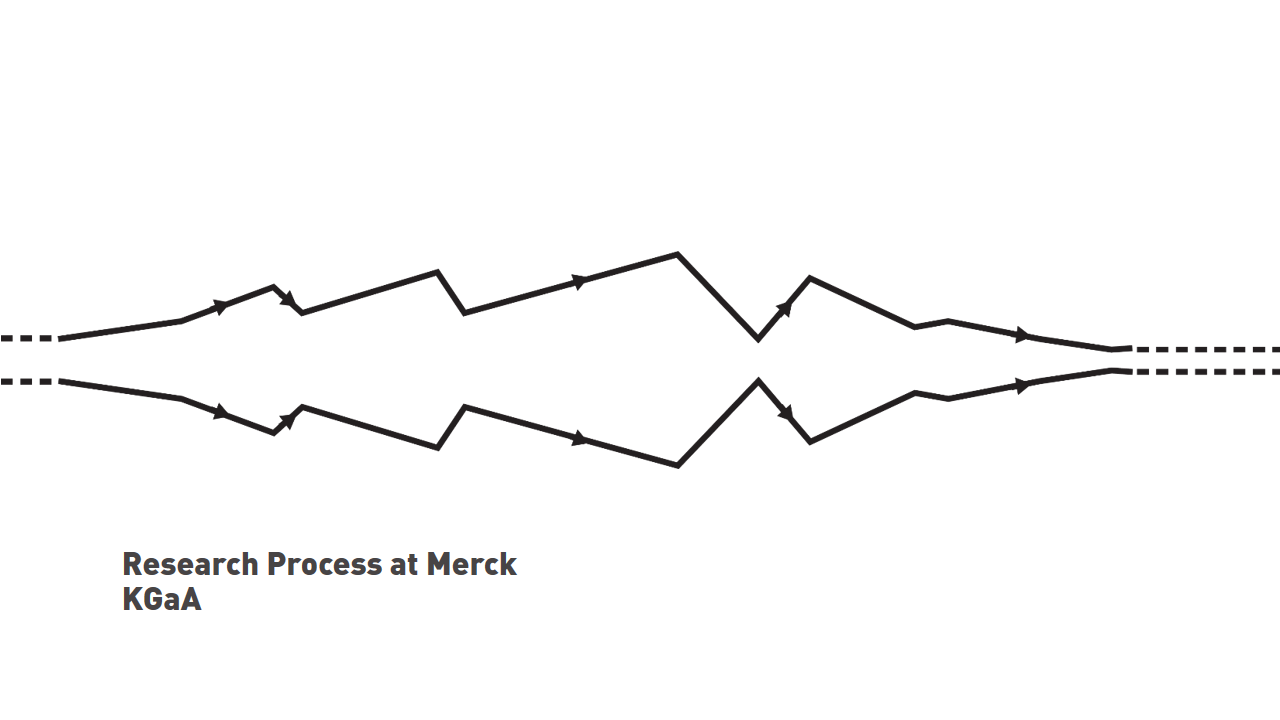
This research and project are based on a design thinking mindset and approach. Two phases of research followed qualitative data collection methods, common to design thinking and scientific research.
The entire field research phase included 19 interviews with 15 people, participation in 17 meetings, and 3 expert feedback interviews.
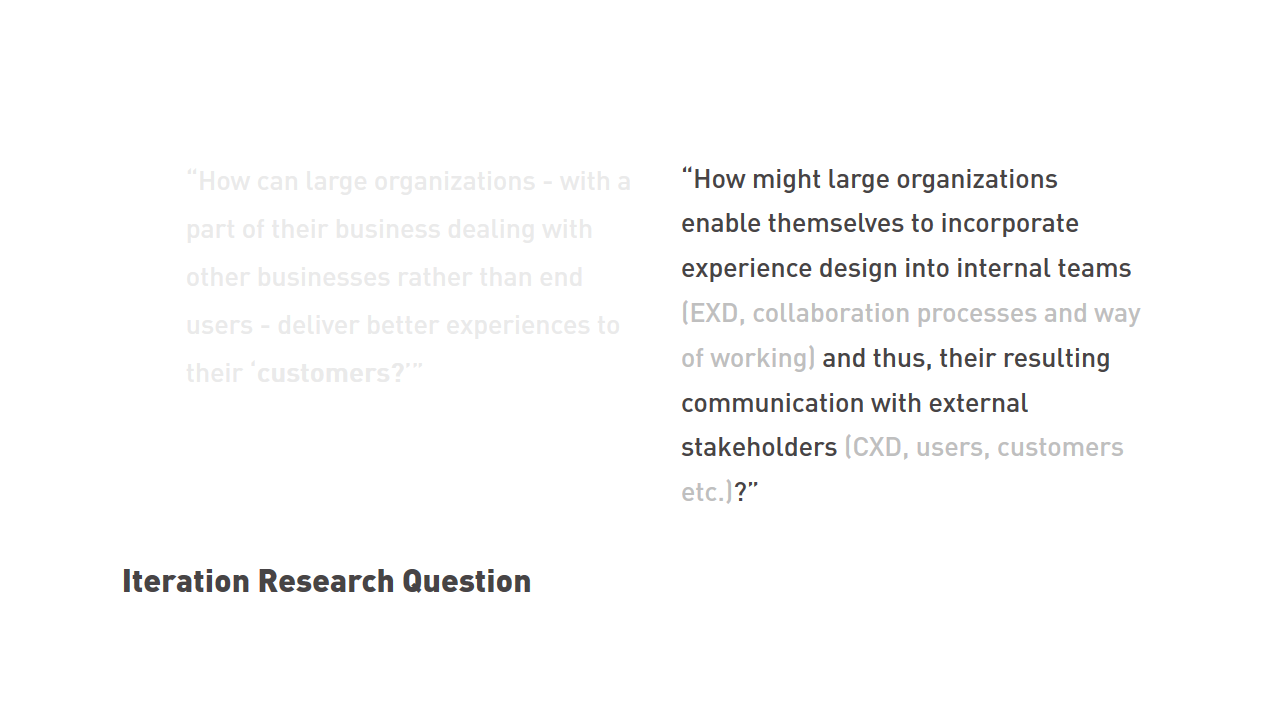
Semi-structured, unstructured and informal interviews were used to gain an understanding of the departments and the individual work of the employees.
Observation was a key method used to witness employees in their natural settings, at internal events, projects, and workshops.
Immersion in such situations helped create moments of prolonged engagement, develop a rapport, and gain an understanding of the perceptions of the participants.
While extensive reading was done about the various business, products, strategies and roadmaps, the most important findings come through the voices of the employees, and emphasis is laid on the same.
2.
Synthesis of Findings
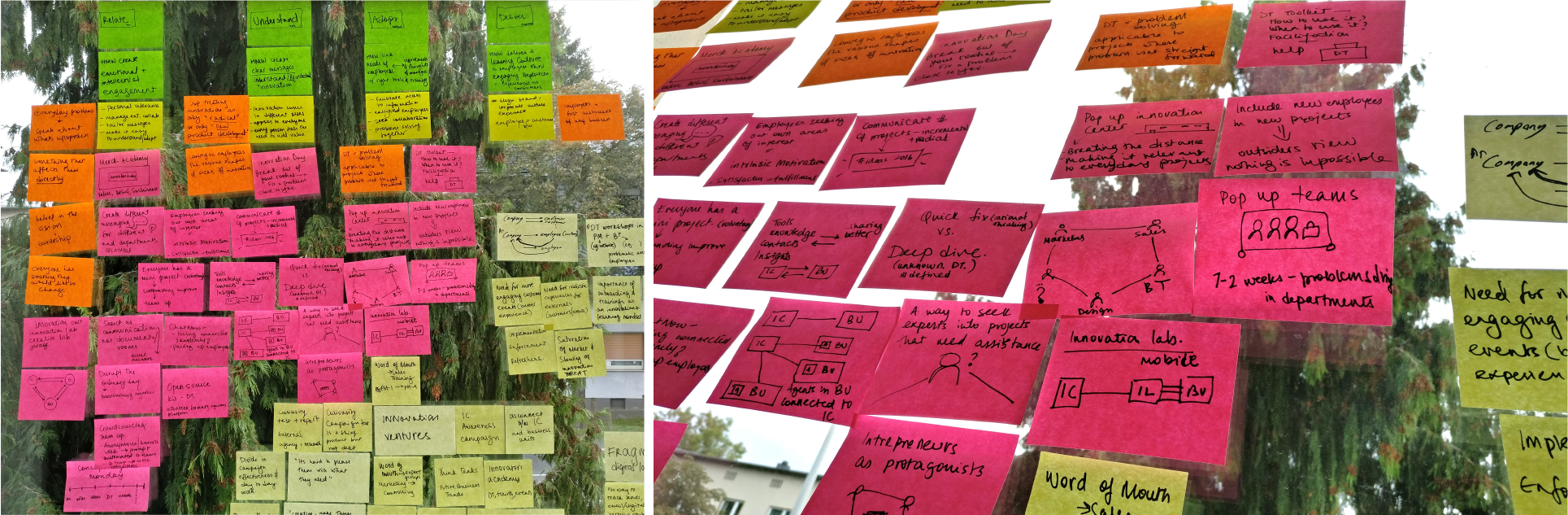
The findings of the two phases of field research resulted in two initial concept ideas that received valuable feedback but did not meet the needs of Merck in a satisfying way. Thus, an intense synthesis phase was undertaken based on the overall research findings and the received feedback. All of the information was laid out in order to identify patterns, gathering insights and defining opportunity areas.
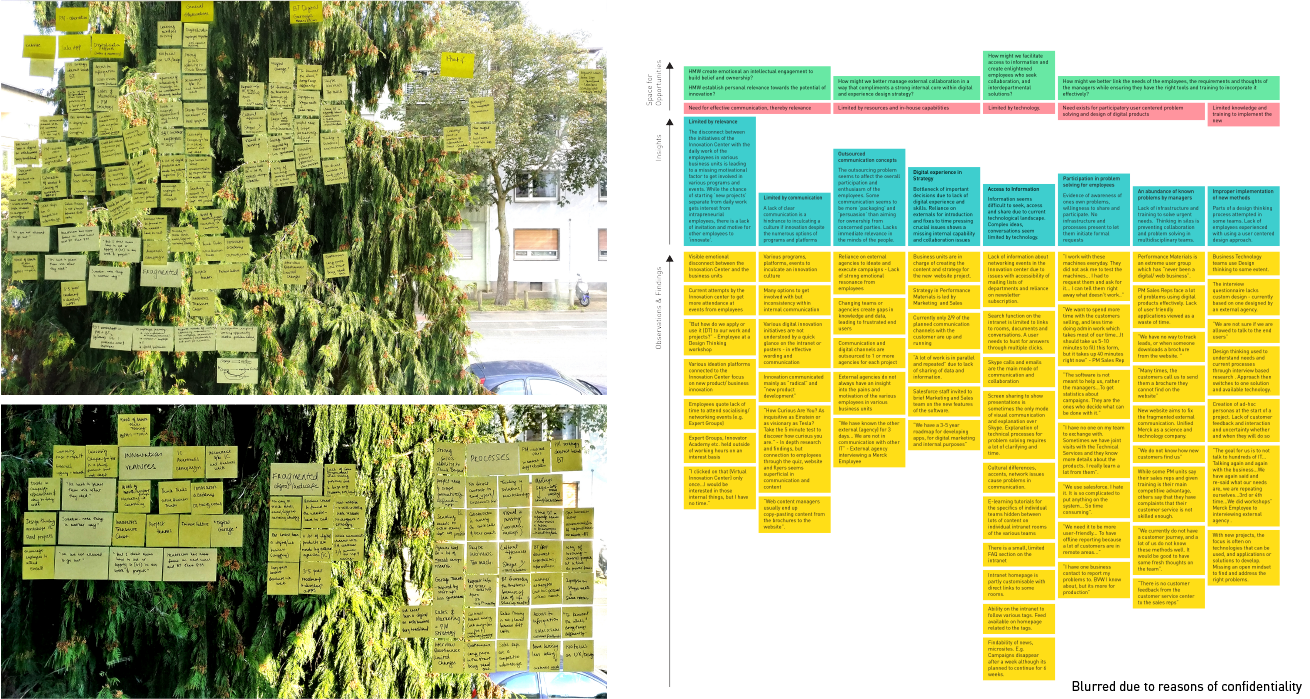
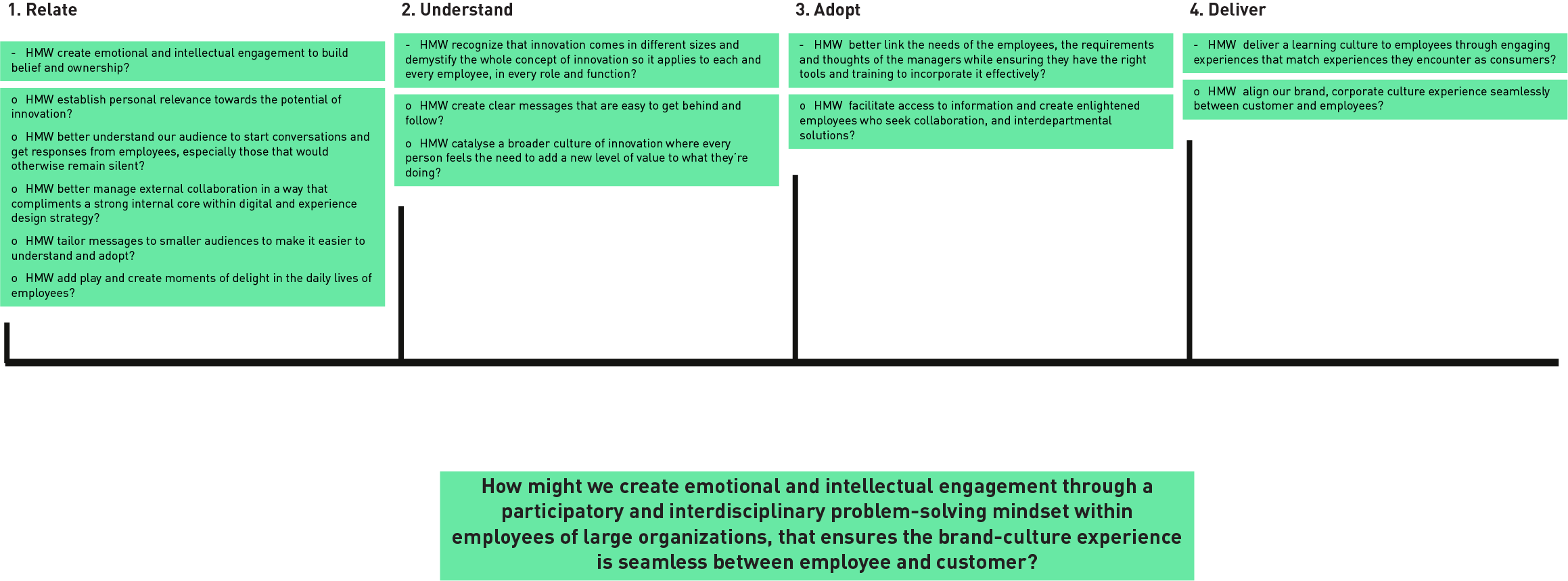
Eight themes helped depict the core of the problem. Another divergent route, using the core eight themes as a way to ask and sort various how might we questions finally led to one overarching question, which became the final opportunity area and became the design challenge for the ideation phase.
"How might we create emotional and intellectual engagement through a participatory and interdisciplinary problem-solving mindset within employees of large organizations, that ensures the brand-culture experience is seamless between employee and customer?"
3.
Ideation
“Educational theory tells us that experience is a powerful teacher that creates both intellectual and emotional engagement with content”. - Kim Erwin, 2014
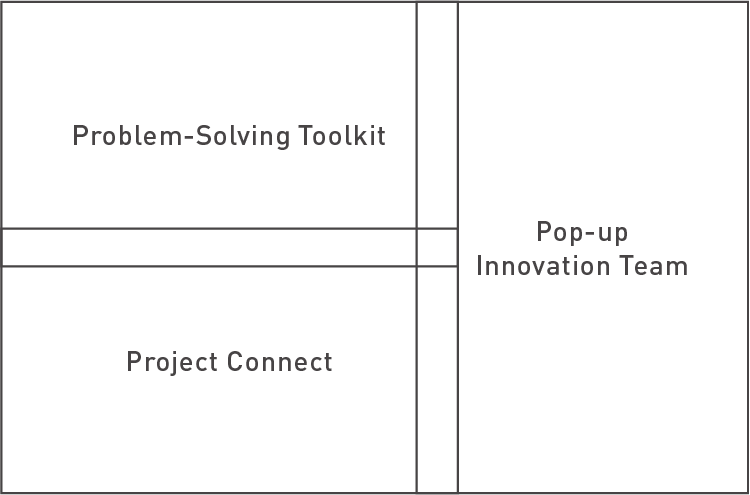
The final concept comprises of three elements working together. The main goal of the concept is to create and facilitate experiences in work situations that inspire and enable employees to take initiative towards things that matter to them, to reach out across disciplines and departments and to challenge them to think differently while being guided and supported to create change. Critical to the concept is also the aim to strengthen the connections and collaboration between the business units, the Innovation Center and Business Technology.
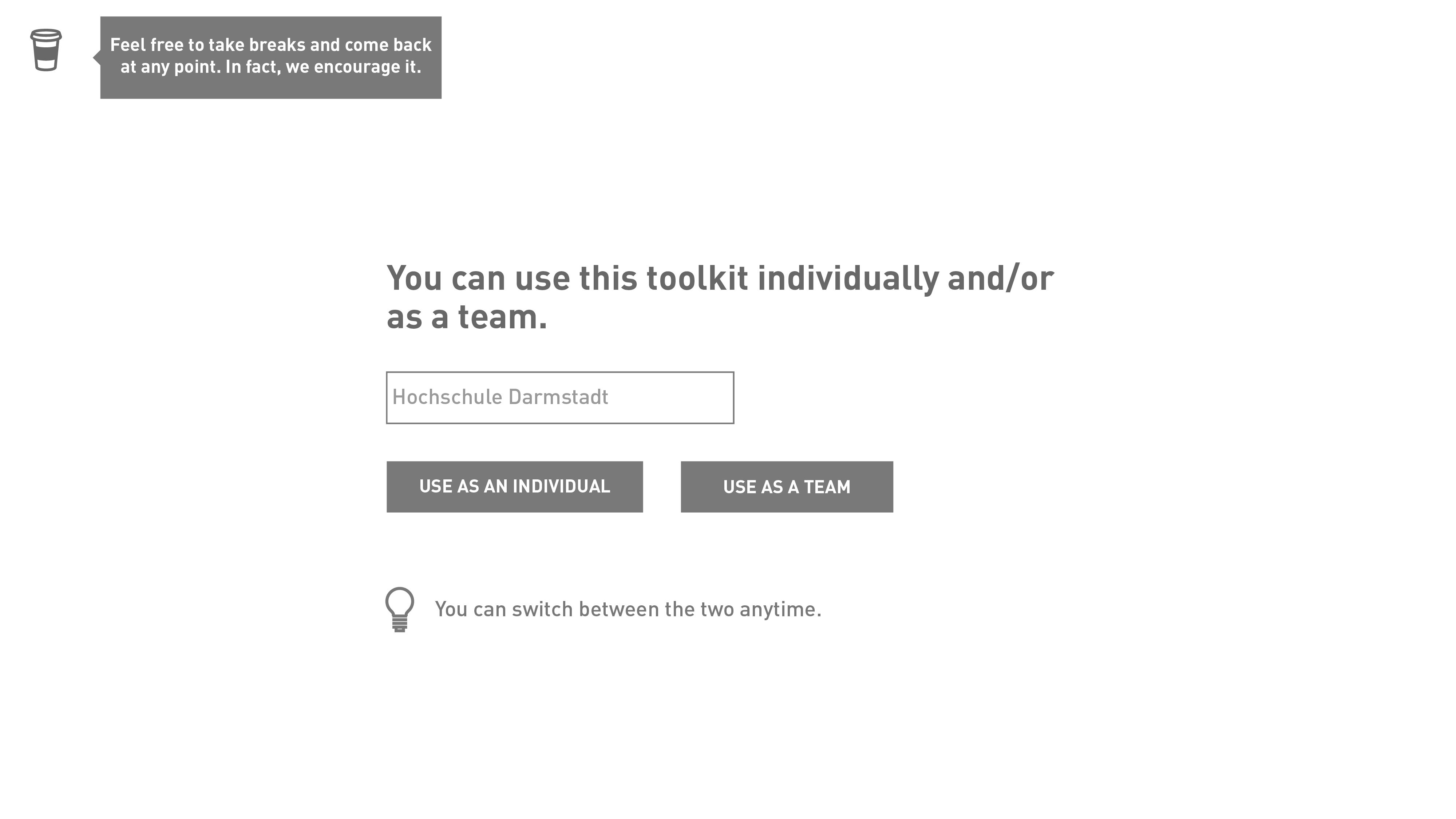
The concept offers an engaging learning experience and borrows various motivational and behavioral factors as well as core principles of interaction and game design:
- Connect learning to prior experiences through building new knowledge that is easier when layering information based on the user's tastes and prior knowledge (Scott, et al., 2013).
- Intuitive design that allows users to learn through interaction with the interface (Rutherford, 2015).
- Incorporate social features that allow users to collaborate making the experience shareable (Rutherford, 2015).
- Progressive Disclosure: Allowing the narrative to unfold through revealing information as it becomes important and not overwhelming users with too much data at once (Rutherford, 2015). Aiming for simplicity that has fewer options at the beginning for novice users with a larger set of specialized options for advanced users (Nielsen, 2006).
- Narrative to immerse the user into a deeper experience through emotional connection (Rutherford, 2015).
- Design for progression in terms of goals to work towards (Rutherford, 2015).
4.
Experimentation through Prototypes
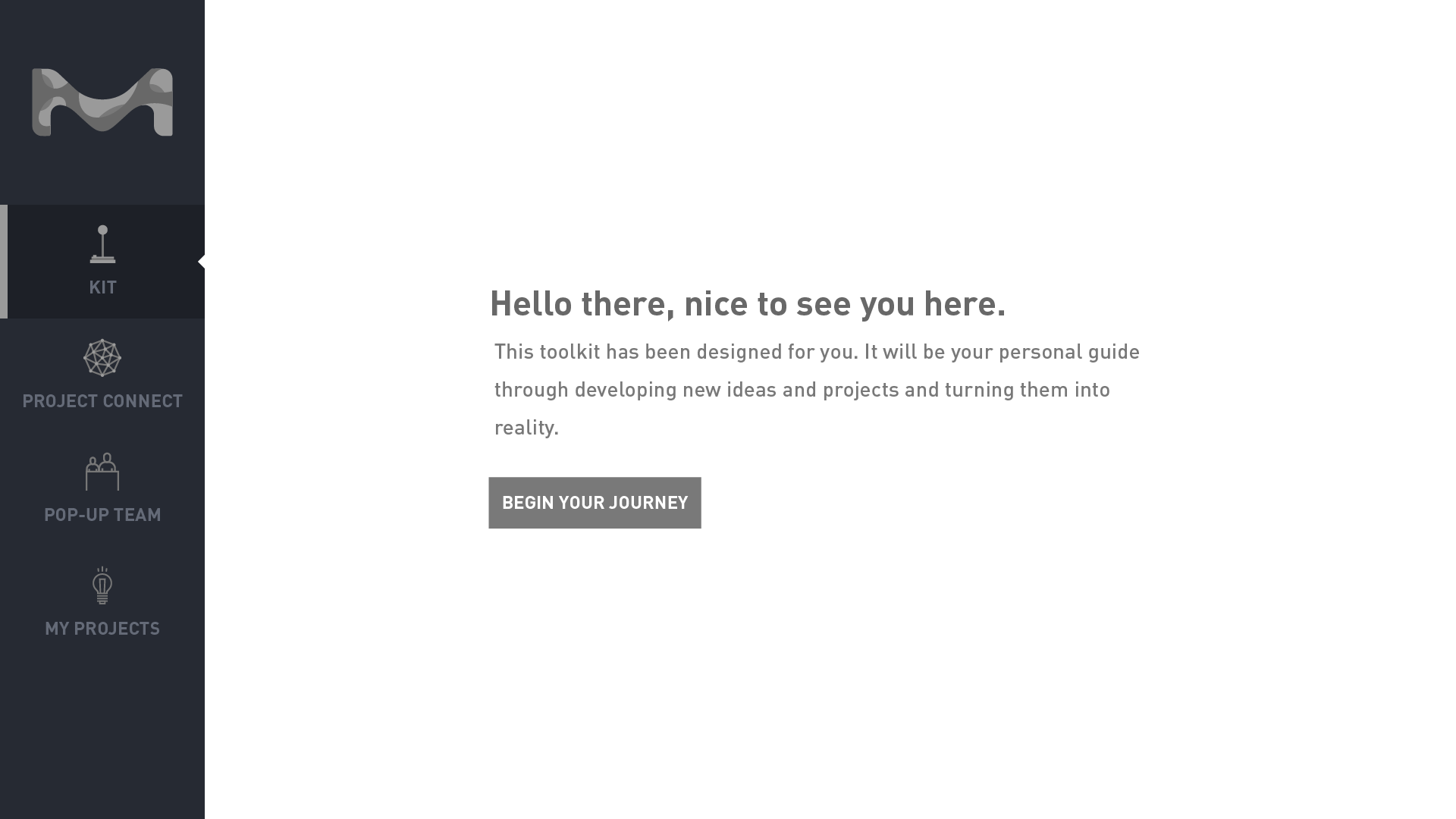
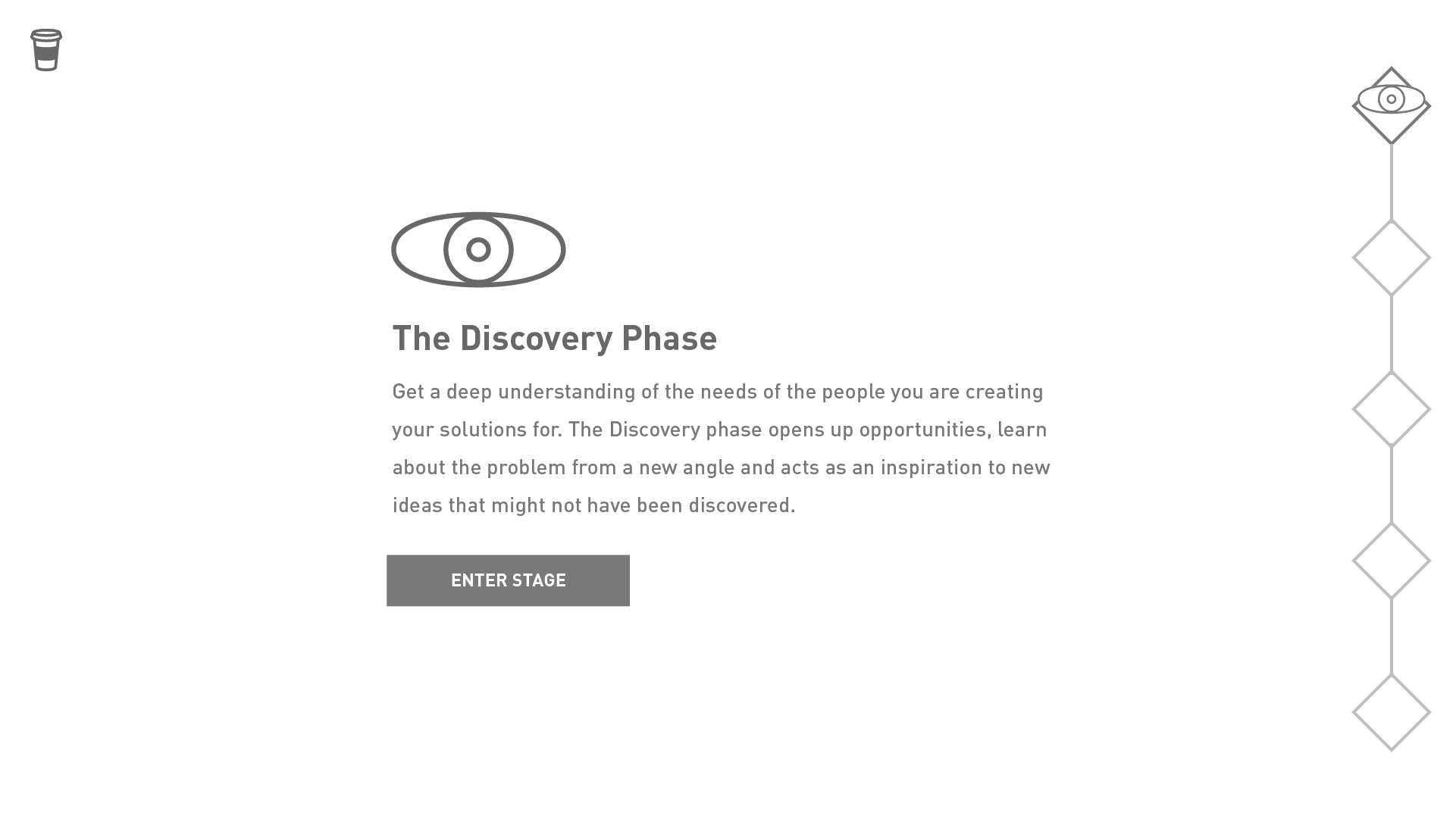
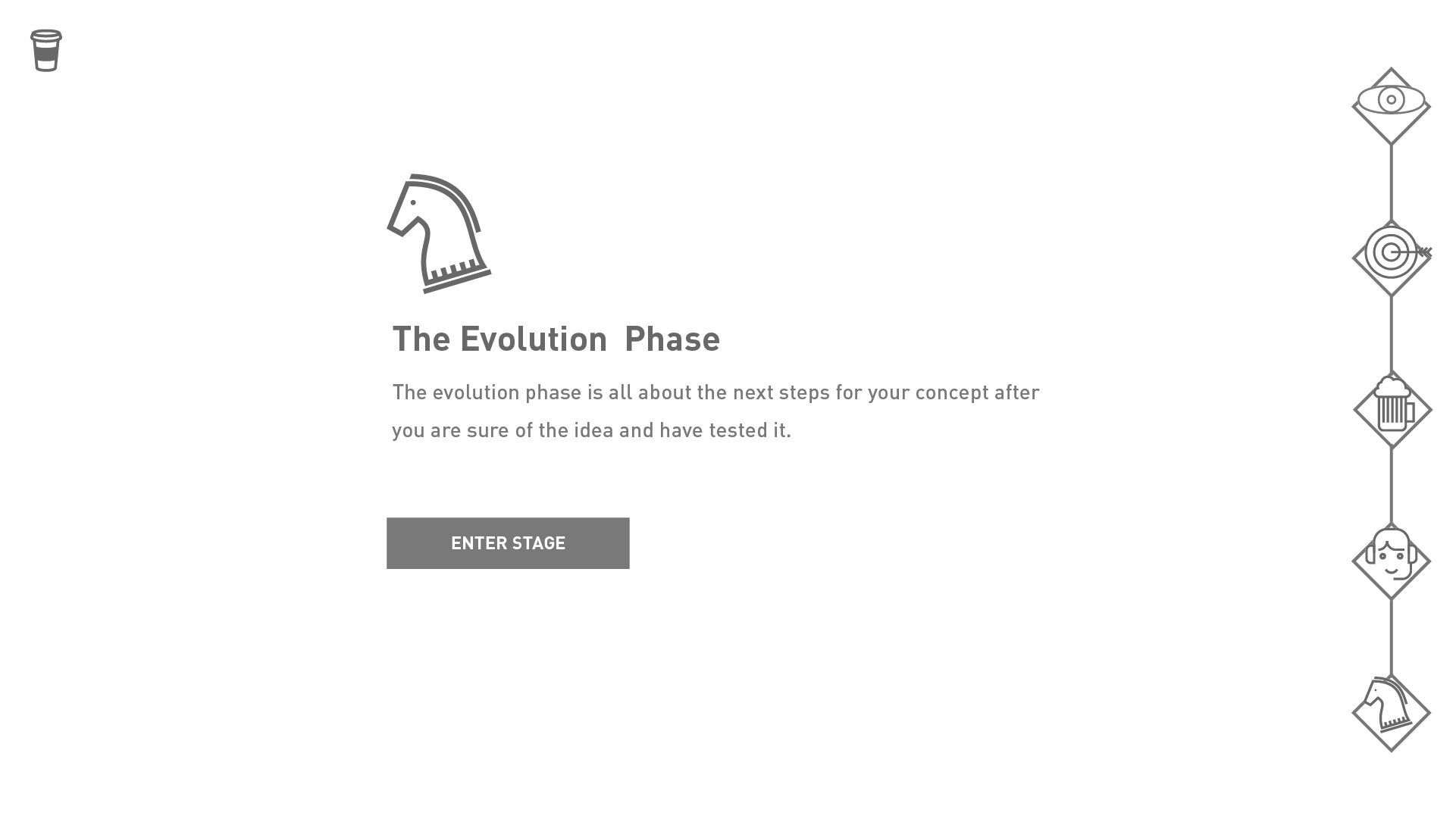
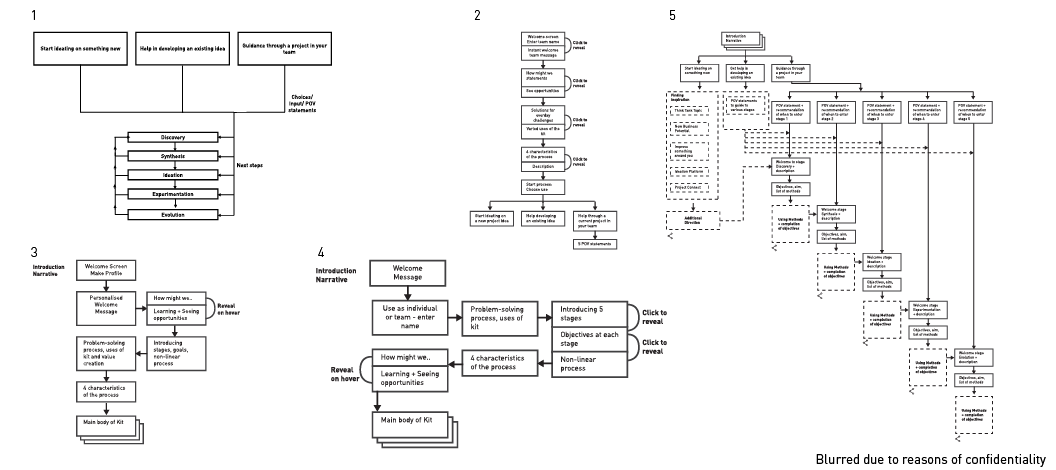
The concept was iterated in conjunction with the building and testing of 3 different prototypes, each an experiment of both the technology used, the approach and the concept itself.

Prototype one was a rapid prototype of one element of the concept – the interactive problem-solving kit. It evaluated by two experts at Merck to collect feedback and decide the validity of the concept itself. Feedback was also collected from three students to evaluate the general idea of an interactive kit based on design thinking. Positive feedback from these three students resulted in a more formal setup of the Merck evaluation. Suggestions from these experts were taken into account and was instrumental in the development of the concept and prototype in the following stages.
Prototype two was an important step in the realization as well as the visualization of the narrative and mind map of the prototype. Intuitive learning of interaction methods with the kit as well as progressive disclosure were experimented with, as ways to balance information with interaction.
Prototype three is the final result and recommendation of this thesis. It went through various iterations along the way as it received evaluation and feedback from various people at Merck.
5.
Evaluation of Concept
The final prototype and the overall concept was shared and evaluated with ten employees at Merck, not including the two that evaluated prototype one, in order to decide further steps and to acquire an indication of their acceptance and need of such a concept The evaluation and feedback from a total of 12 participants validated my findings and the core of the concept.
6.
Implementation
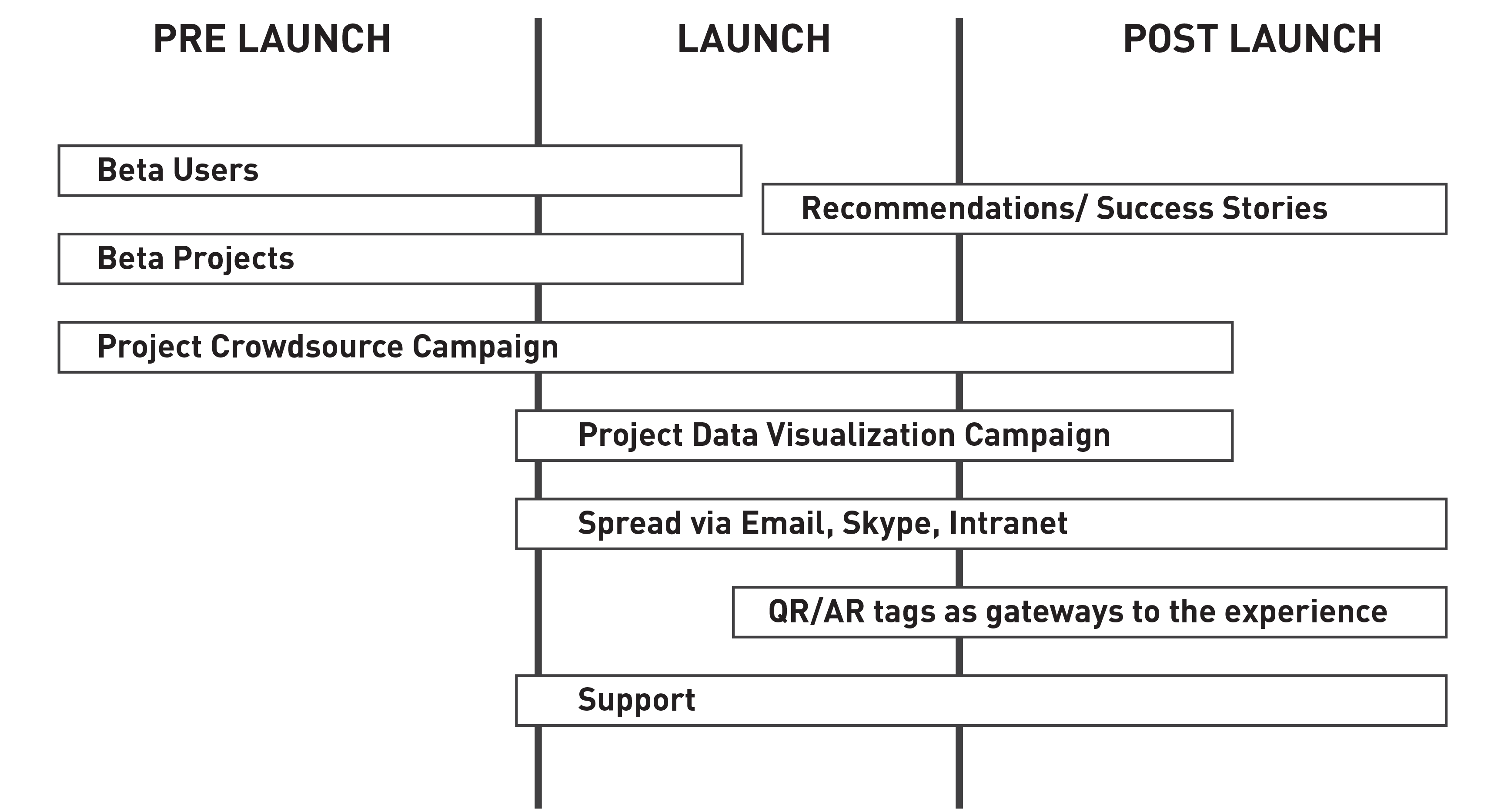
An outline for the communication framework and further development of the concept was laid out based on various target group tiers and the evaluation of the concept.
Conclusion
This thesis started with looking outwards towards sales, marketing and customer experience design of Merck. The approach and focus changed several times during the research and synthesis phase. As digital transformation puts organizations on the offensive, racing to be innovative, it not only reorganizes customer expectations, but also the expectations of one’s own employees. As the world moves from consumption to participation, this analogy does not only apply to “consumers” and “customers”. Organizations need to be responsive inwards as much as outwards, not just offering, but rather counting on the participation of its employees.
At the end of the first phase of research, the focus shifted from outward to inward, with the first concept directed towards enabling, involving and empowering employees. With this in mind, the second phase of the research brought to light several collaboration opportunities and a concept, aiming for not only collaboration but comprising of various layers of employee experience was born.
The model, a combination of Project Connect, Problem-Solving Toolkit, and the Pop-Up Innovation Center, is strengthened by one another. It starts a conversation with the employees and eases them into turning thoughts into action, within and outside of work challenges. At the same time, it urges employees to connect to each other, forming a network whose main aim is to bring similarities and shared aims to the surface. Lastly, it brings in a support system that strengthens the shared role of empathy, technology, and innovation in the organization.
The strength of this concept lies in the need-finding research, as well as the evaluation, both of which spanned several departments.